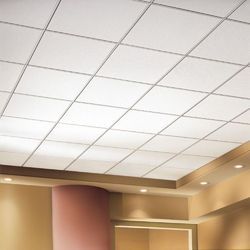
 Modern suspended ceiling systems are created to hide the building’s infrastructure, including pipe, cable or duct. It creates a space above the ceiling in the ceiling, providing access to repairs and inspections. Suspended ceilings can also be used to hide problems such as structural damage. In addition, suspended ceilings can conceal sprinkler systems and provide full fire suppression functionality.
For many years, ceilings were made of basic white tiles, but modern innovations no longer have sizes, colors, materials (including retro designs and artificial leather, wood or suspended ceiling systems), visual effects and shapes, patterns and many options. Tissues, support systems and access paths to the plenum. Custom ceiling ceiling tiles can be made at relatively low cost compared to the past.
Acoustic balance and control was another factor in making low ceilings. A very quiet interior may appear more peaceful, while a noisy room may come in. The acoustic performance of suspended ceilings has increased significantly over the years with better sound absorption and attenuation. This can be achieved by adding insulation, more commonly referred to as “sound patches,” known as Sound Attenuation Tape (SAB), to aid sound output and keep adjacent rooms quieter.
interior quality; ventilation, VOC emissions, lighting and thermal system control, thermal comfort, daylight use for natural lighting, optimization of acoustics and outdoor use.
Most modern suspended ceiling manufacturers include sustainability as a goal. Sustainable features may include: Daylight efficiency and energy efficiency, including thermal insulation properties. This uses the ceiling plane to reflect daylight and electric light to maximize lumen efficiency, increasing the comfort and usability of the interior. A common measure of light reflectance of a ceiling material is ASTM E 1477 (LR-1) for Light Reflectance. A level of about 75% is considered good, although higher levels are possible. Integration with manic, electrical and plumbing (MEP) is important in lowered ceilings because many of these systems are defined above the ceiling. Fortunately, most ceiling system products are designed with this integration in mind. Decisions can also affect aesthetics, access and maintenance.
A typical suspended ceiling consists of a grid process of top-down metal channels in a “T” shape; These channels adhere to each other as regularly spaced cells. Each cell is then lightly filled with ceiling grids or “panels” that open into the grid. The primary grid types are “Standard 1″ (15/16 face), Slimline (9/16” grid), and concealed grid. This type of suspended ceiling uses a method of interlocking interlocking panels, and the grid is achieved using a small “spline” metal strips called metal strips Normally, such ceilings may have a “key panel” (usually in the corner) that allows other panels to exit through the grid (a series of metal channels called “bars”) and panels. These types of ceilings are often used for access to legacy systems or the ceiling .More common in facilities considered to be non-conferencing.This system has the most significant disadvantages, especially when compared to the more common ‘drop panel’ system. Difficulty removing and reinstalling panels from the grid, which in some cases can result in damage to exposed panels. , it is becoming increasingly difficult to find replacement panels for such a reduced ceiling. placed in the ceiling voids where the tile was missing, these were placed on the edge of a still hidden tile, then the tile was slid into the Snow, locking the rocks.
 Flooring Systems